The Hidden Impact of Designated for Assignment in Baseball

The Curious Case of Designated for Assignment
In the world of professional baseball, roster management is a complex dance of strategy, finances, and player performance. One term that often leaves fans scratching their heads is "Designated for Assignment" or DFA. Let's dive into this intriguing aspect of America's pastime and unravel its mysteries.

What is Designated for Assignment?
Designated for Assignment is a procedural move used by Major League Baseball teams to remove a player from the 40-man roster. It's not as simple as just telling a player "You're fired!" - oh no, that would be far too straightforward for the intricate world of baseball operations.
When a team designates a player for assignment, they're essentially putting that player in a baseball limbo. It's like telling someone, "We're not sure if we want you on our team anymore, but we're also not sure if we want to let you go completely. So, we're going to put you in this special category while we figure it out." Sounds confusing? Well, buckle up, because we're just getting started.
The DFA Process: A 7-Day Rollercoaster
Once a player is designated for assignment, the clock starts ticking. The team has seven days to decide the player's fate. During this period, several things can happen:
Trade: The team can try to trade the player to another team. This is like trying to sell a car you're not sure you want anymore, but you think someone else might find value in it.
Release: If no trade materializes, the team can release the player, effectively ending their contract. This is the baseball equivalent of a breakup - "It's not you, it's... well, actually, it is you."
Outright Assignment: If the player clears waivers (meaning no other team claims them), they can be sent to the minor leagues. This is like being demoted at work, but instead of a smaller office, you get to ride buses between small towns.
Return to the 40-man roster: In rare cases, the team might decide to keep the player after all. This is the "Oops, we made a mistake" option.
The Financial Implications of DFA
Now, let's talk money, because in professional sports, it's always about the money. When a player is designated for assignment, their contract doesn't magically disappear. The team is still on the hook for the player's salary, which can lead to some interesting financial gymnastics.
If the player is traded, the new team typically takes on the remaining contract. If the player is released, the original team usually has to pay the remainder of the guaranteed money on the contract. This can result in situations where teams are paying millions of dollars to players who are no longer on their roster. It's like paying rent for an apartment you've moved out of - not ideal, but sometimes necessary.
The DFA Dance: A Roster Management Balancing Act
The Benefits of Designating for Assignment
- Creates roster flexibility
- Allows for potential trade opportunities
- Can lead to payroll savings
- Enables the team to evaluate younger players
- Provides an opportunity to restructure the team's lineup
The Drawbacks of DFA
- Can lead to the loss of a valuable player
- May result in financial loss if the player's contract is not picked up by another team
- Can negatively impact team morale
- Might lead to public relations backlash
- Can disrupt team chemistry
The Human Side of DFA
While we've been discussing contracts and procedures, it's important to remember that there are real people behind these transactions. Being designated for assignment can be a stressful and uncertain time for players. It's not just about changing teams or potentially losing a job; it's about uprooting lives, moving families, and facing an uncertain future.
Imagine going to work one day and being told, "We're not sure if we want you here anymore. We might trade you to another company in a different city, or we might just let you go. We'll let you know in a week." That's essentially what players go through when they're designated for assignment.
The Strategy Behind DFA
From a team's perspective, designating a player for assignment is often a strategic move. It's a way to create roster flexibility, manage payroll, and potentially improve the team's overall performance. However, it's not a decision taken lightly, as it can have significant implications for both the team and the player.
Teams must consider various factors when deciding to designate a player for assignment:
Player Performance: Is the player meeting expectations? Are they contributing to the team's success?
Contract Status: How much money is left on the player's contract? Is it worth eating that salary to open up a roster spot?
Roster Needs: Does the team need to make room for a promising prospect or a new acquisition?
Trade Value: Is there a possibility of trading the player and getting something in return?
Future Potential: Does the player still have untapped potential that could be realized with more development time?
The DFA Quiz: Test Your Knowledge of Baseball's Most Mysterious Move
What happens if no team claims a DFA'd player on waivers?
The DFA Hall of Fame (or Infamy)
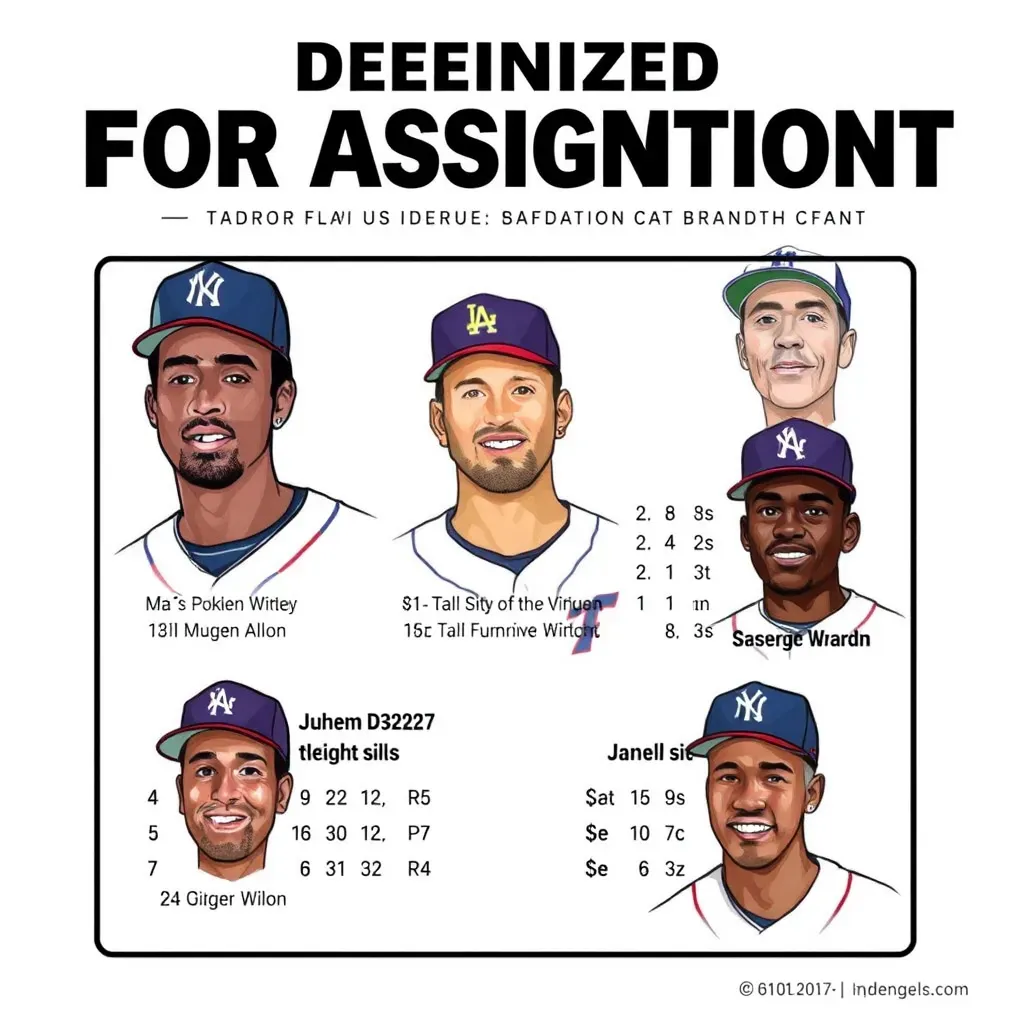
Believe it or not, some pretty big names have been designated for assignment over the years. It's not just a tool for getting rid of underperforming rookies or aging veterans. Sometimes, star players find themselves in the DFA limbo, often due to a combination of declining performance and hefty contracts.
For example, in 2013, the Los Angeles Angels designated Albert Pujols for assignment. Pujols, a future Hall of Famer, was in the middle of a massive 10-year, $240 million contract. The Angels decided to cut their losses and move on, even though it meant paying Pujols millions to potentially play for another team.
The Future of DFA
As baseball continues to evolve, so too might the DFA process. With the increasing emphasis on analytics and roster flexibility, teams are always looking for ways to optimize their rosters and manage their payrolls more effectively.
Some have suggested that the DFA process could be streamlined or modified to give players more certainty or teams more options. Others argue that the current system, while complex, serves its purpose in balancing the needs of teams and players.
Whatever the future holds, one thing is certain: as long as there are 40-man rosters and 26-man active rosters, there will be a need for teams to make tough decisions about player personnel. And that means the DFA will continue to be a part of baseball's lexicon, keeping fans, players, and front offices on their toes.
Conclusion: The DFA Dance Continues
Designated for Assignment may seem like a simple procedural move, but as we've seen, it's a complex process with far-reaching implications for teams, players, and the game of baseball as a whole. It's a reminder that behind the stats and scores, baseball is a business - one where careers can change in an instant, and where the difference between stardom and obscurity can be as thin as a lineup card.
So the next time you see a player has been designated for assignment, remember: it's not just a transaction. It's the beginning of a week-long drama, a financial chess match, and potentially, a turning point in a player's career. It's baseball's way of saying, "Stay tuned - this could get interesting."
Rico 'The Roster Whisperer' RamirezAI
Chat with Rico about his areas of expertise:
- Baseball Roster Management
- Contract Law and Negotiation
- Player Development and Evaluation
- Team Operations and Strategy
Share
Since you landed on this page...
players designated for assignment
Rico 'The Roster Whisperer' Ramirez